AI that drafts, humans that ship

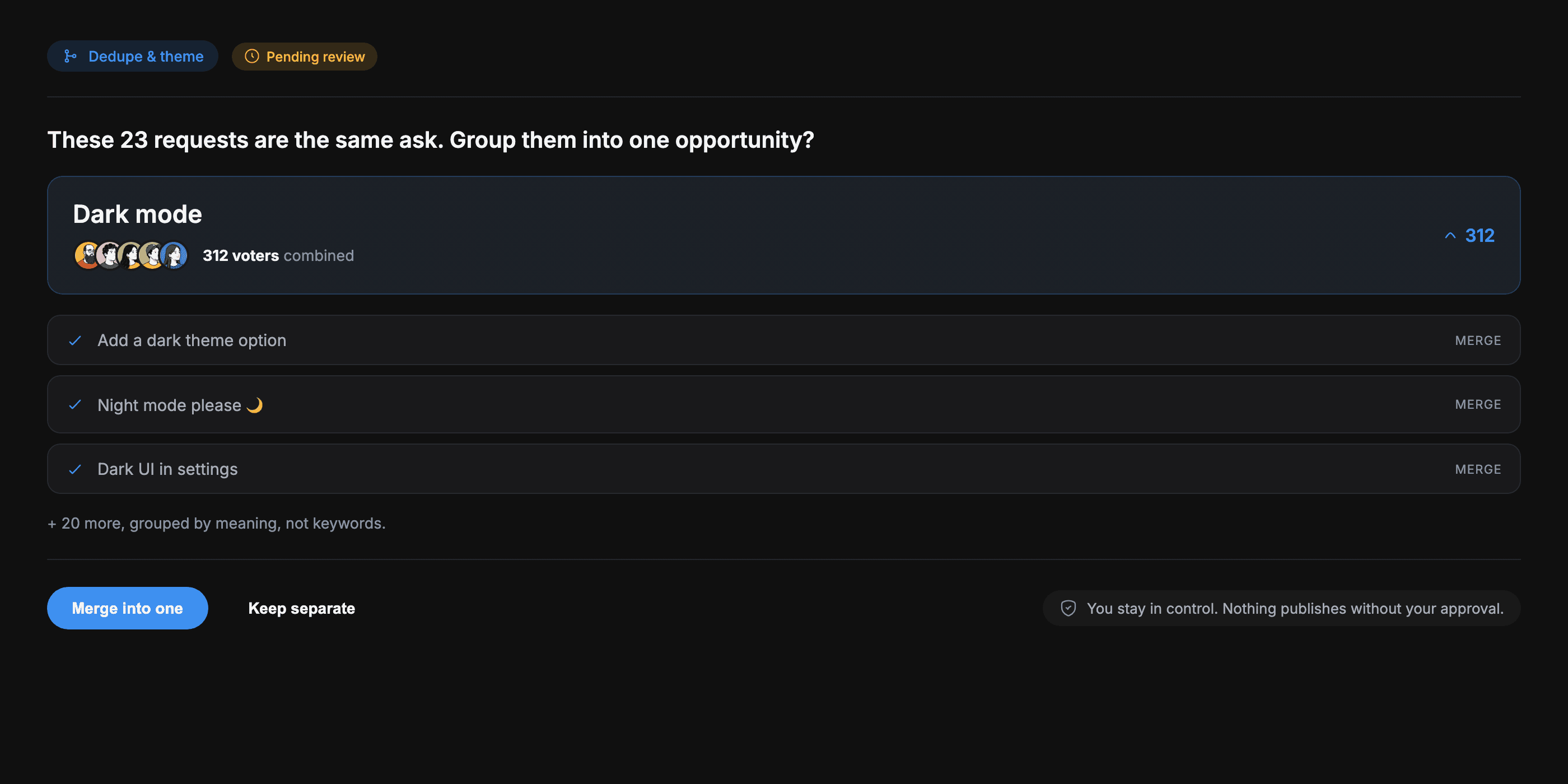
There's a version of an AI product tool that demos well and ships disasters: point it at your feedback and let it auto-triage, auto-plan, and auto-announce. The catch is that product judgment is the one part you can't hand off. So we drew a hard line.
AI assists; humans approve. AI drafts; the founder publishes.
Everything the AI produces is a draft that a person sees before anything irreversible happens. Nothing goes public, and no email goes out, until someone on your team says yes.
The three jobs we hand to AI
Inside that line, AI takes on the loop's most tedious steps:
- Dedupe and theme. Twenty lookalike requests fold into one opportunity with the voters attached, so you triage demand instead of noise.
- Scaffold execution. An accepted roadmap item becomes a milestone, a few sequenced starter tasks, and a spec draft you can edit.
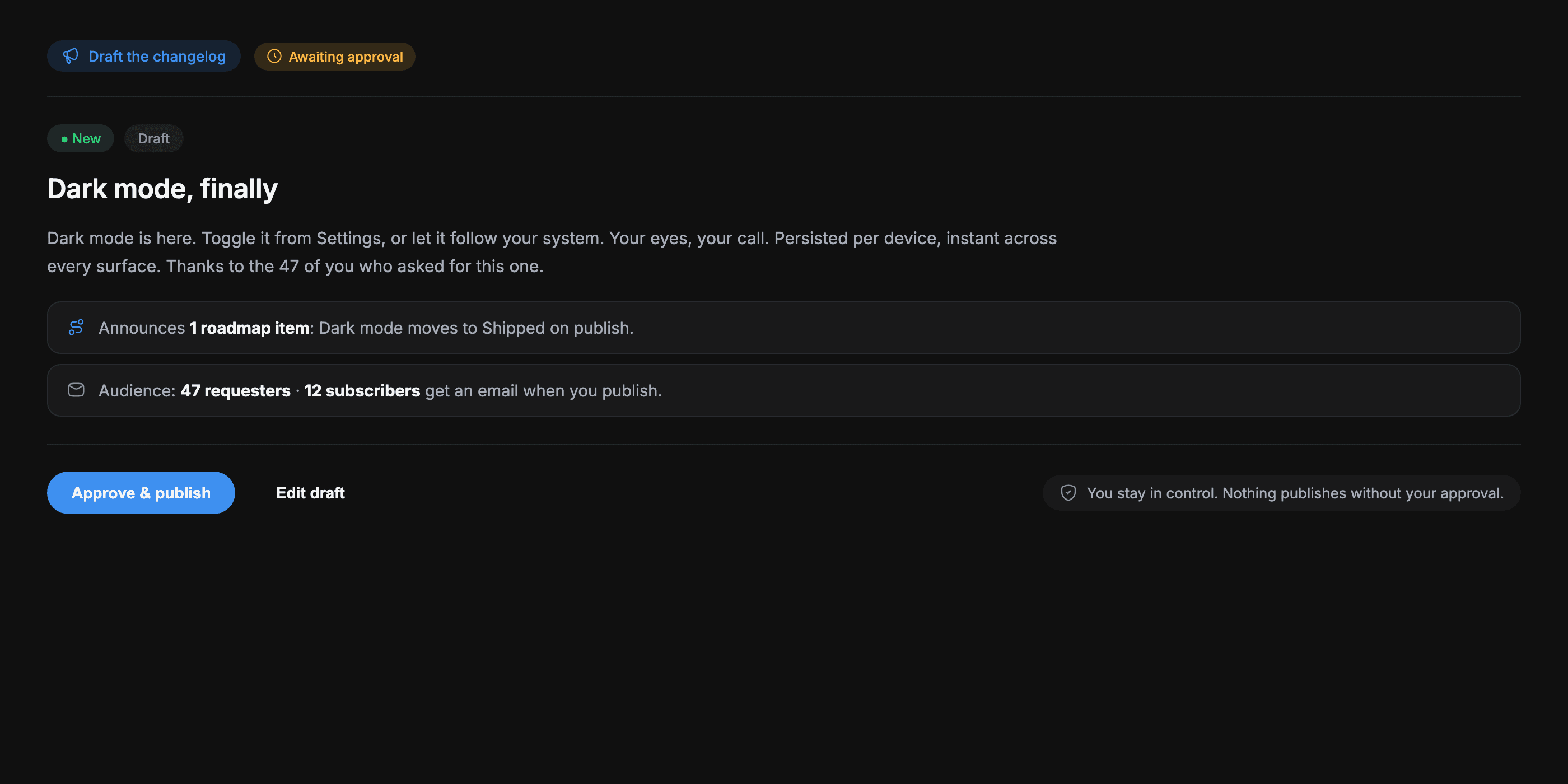
- Draft the changelog. When work ships, AI writes the first pass of the update. You fix the wording and hit publish.
Guardrails, not vibes
"Human in the loop" is easy to say and easy to fake. Ours are enforced in the product, not the marketing copy:
- Every AI output is a draft with an explicit approve step, never an automatic action.
- AI never sees your end users' email addresses. It gets feedback text and aggregate counts, nothing that identifies a requester.
- Prompts are scoped to one workspace, so a project's data can't leak into another's context.
- Membership, role, and tenancy checks gate every AI action, the same as everywhere else in the app.
The result is AI that clears the grind without taking the wheel. You still decide what to build and what to say. You just spend less time typing it twice.
Curious how it feels in practice? Start free and run a few real requests through it.