7 Canny Alternatives for Tiny Teams in 2026

If you are shopping for Canny alternatives, you probably want a public feedback board and roadmap without the price tag or weight that comes with a larger tool. This post walks through why teams switch, then lays out seven options at a high level, so you can match one to how you actually work. The through-line: most feedback tools stop at collecting requests, and the gap you feel is what happens after.
Why teams look for a Canny alternative
Canny is a well-known feedback and roadmap tool in the product feedback category. It does its job. But there are recurring reasons small teams start looking elsewhere:
- Price sensitivity. Solo founders and 2-5 person teams often feel that per-seat or higher-tier pricing outpaces what they need at their stage.
- Too much for a tiny team. Feature depth built for larger product orgs can feel like overhead when you are shipping every week and want to move fast.
- The gap after feedback. Collecting votes is only half the job. Once a request is validated, you still have to plan it, build it, and tell the people who asked. Most feedback tools hand that off to a separate execution tool.
- Build-in-public momentum. Indie hackers want the public roadmap and changelog to double as a distribution channel, not just a support inbox.
That last point is the real fork. If you only need a nicer inbox, plenty of tools qualify. If you want feedback to actually turn into shipped work in one place, the shortlist gets shorter.
7 Canny alternatives, compared honestly
These are described by the category each occupies. Pricing and exact feature sets change often, so check each vendor directly before you commit.
| Tool | Category | Best for | Execution built in |
|---|---|---|---|
| Feedock | Feedback + execution workspace | The full request-to-shipped loop in one place | Yes: tasks, milestones, Git-driven progress |
| Featurebase | Feedback, roadmap + changelog hub | A polished public feedback hub | No |
| Nolt | Lightweight voting board | A clean, simple public board | No |
| Frill | Feedback widget, roadmap + announcements | Small SaaS teams wanting the public-facing side | No |
| Featureos | Feedback boards, roadmap + changelog | An established feedback hub | No |
| Fider | Open-source, self-hosted board | Owning your data with no per-seat cost | No |
| GitHub Discussions | Community threads + reactions | Dev-tool audiences already on GitHub | No |
1. Feedock (best for tiny teams that want the full loop)
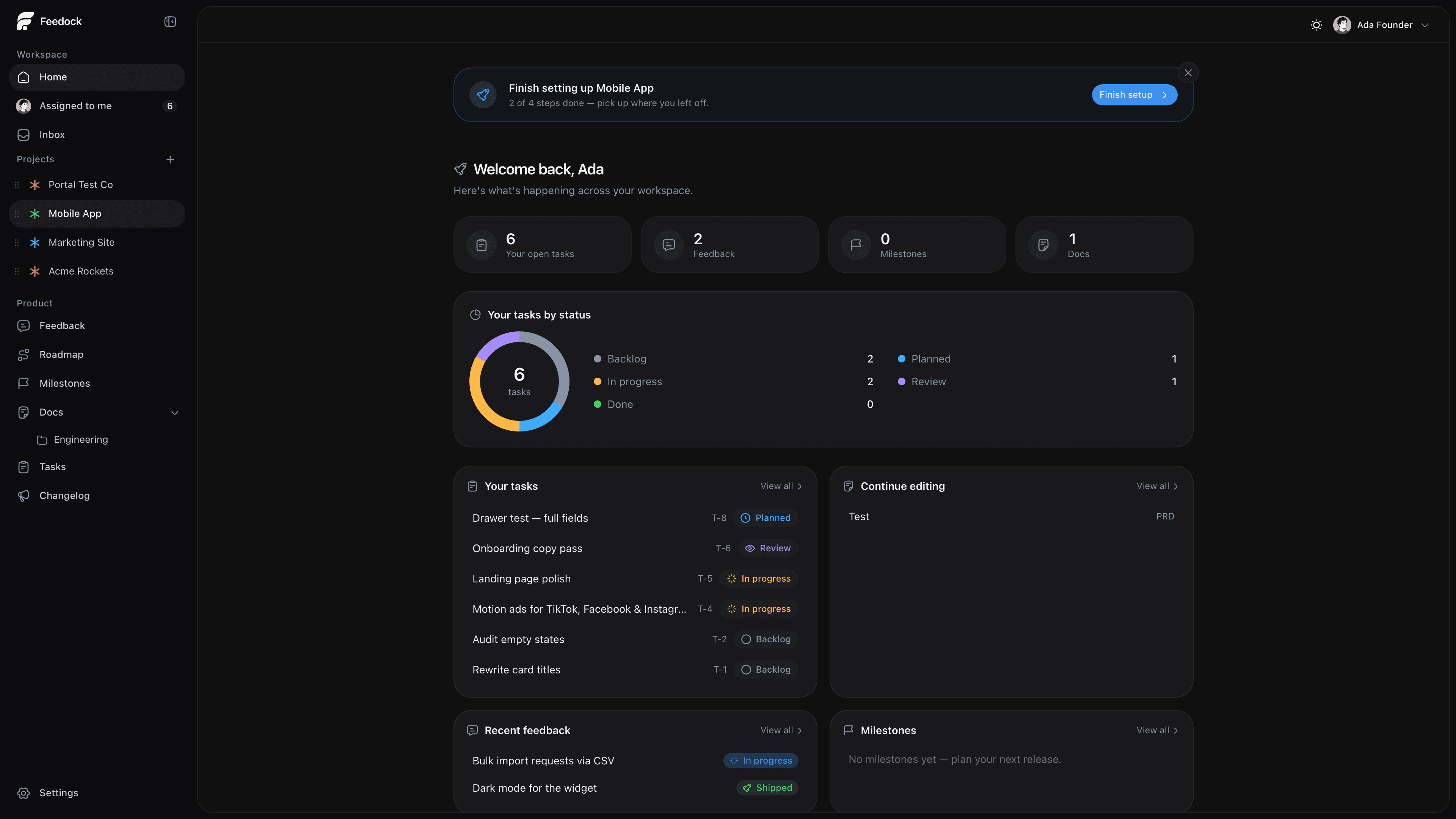
Feedock is a feedback tool with execution built in. You get an account-less feedback board (end users submit, vote, and comment with just an email and a magic link, no account required), a public roadmap (Now / Next / Later / Shipped), and a changelog that emails the people who asked when their request ships. The difference is what sits underneath: internal tasks, milestones with auto-derived progress, and GitHub, GitLab, Bitbucket, and Gitea integrations that move tasks forward from commits and PRs. AI drafts along the way (deduping similar requests, scaffolding tasks, drafting changelog entries), and a human always approves before anything publishes. It is built for solo founders and small teams, not enterprise PM departments.
2. Featurebase
Featurebase sits in the same feedback, roadmap, and changelog category as Canny, with a modern feel. It is a solid pick if you want a polished public feedback hub and do not need execution in the same tool. Like Canny, it is strong at the front half of the loop and leaves the building to your task tracker.
3. Nolt
Nolt focuses on a clean, simple public feedback board with upvoting. If your only requirement is a lightweight place for users to post and vote on ideas, it is worth a look. It stays deliberately narrow, so pair it with something else for roadmap and changelog depth.
4. Frill
Frill bundles a feedback widget, roadmap, and announcements in one place, aimed at small SaaS teams. It is a reasonable all-in-one for the public-facing side of feedback. As with the others here, execution lives in a separate tool.
5. Featureos (formerly Rapidr)
Featureos covers feedback boards, roadmaps, and changelogs for product teams. It is another capable public feedback hub in the same broad category. Evaluate it if you want an established alternative and are comfortable running your build process elsewhere.
6. Fider (open source, self-hosted)
Fider is an open-source feedback board you host yourself. If you value owning your data and are fine maintaining the deployment, it removes per-seat cost entirely. The trade-off is that you take on hosting and upkeep, and it stays focused on the board rather than roadmap or execution.
7. GitHub Discussions or a public repo
If your users are technical and already live on GitHub, Discussions plus issue reactions can act as a scrappy feedback and voting surface at no extra cost. It is not a purpose-built roadmap or changelog, and non-technical users will bounce off it, but for a dev-tool audience it can carry you early.
How to choose the right one
Ignore feature-count comparisons and answer these instead:
- Who is your audience? Non-technical users need account-less submission and a friendly public surface. A dev audience can tolerate GitHub-native options.
- Do you want feedback and building in one place, or two? If you are happy running feedback separately from your task tracker, most tools here fit. If you want requests to become tasks and shipped updates without a handoff, pick a tool with execution built in.
- How do voters find out you shipped? Look for a changelog that notifies the specific people who asked, not just a public feed nobody rechecks.
- Does it move on its own? For small teams, automation matters more than manual polish. Tools that pull progress from your commits and PRs save real time.
- What does it cost at your size? Check the entry tier and whether pricing is per seat. For a 2-5 person team, per-seat math adds up fast.
Where Feedock fits
Most tools on this list are strong at collecting feedback and stop there. What sets Feedock apart is that the building is included, so a request does not fall off a cliff after it gets votes.
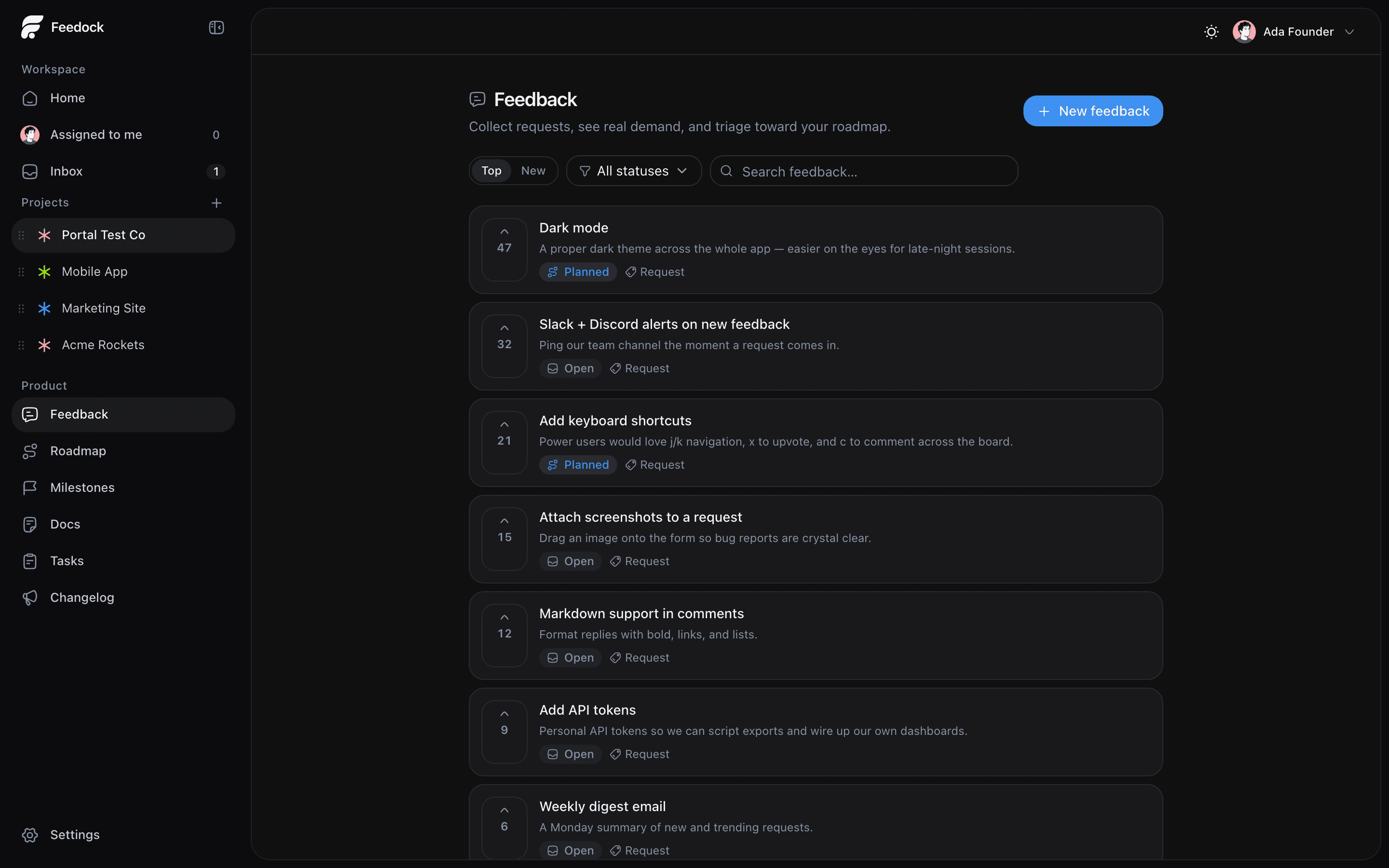
Here is the loop in practice. Users submit and vote on the account-less board. AI groups similar requests so twenty near-duplicates become one opportunity you can act on (it never sees end users' email addresses). You accept it onto the public roadmap, and AI scaffolds the starter tasks and milestone. As you push commits and open PRs on GitHub, GitLab, Bitbucket, or Gitea, the linked tasks move across Backlog, In Progress, Review, and Done on their own. When it ships, AI drafts the changelog entry, you approve it, and the people who asked get emailed automatically. The same update lands on your public roadmap and portal, ready to embed on your own site as a hosted portal, a React SDK, or a one-line widget.
Collecting feedback is easy. The hard part is closing the loop back to the person who asked, and that is the part most tools leave to you.
That is the whole pitch: from feedback to shipped, in one workspace, without stitching a feedback tool to a separate tracker.
Frequently asked questions
What is the best free Canny alternative?
It depends on what you mean by free. Fider is open source and self-hosted, so there is no per-seat cost if you run it yourself. If you want a hosted tool without setup, Feedock lets you start free and keep feedback, roadmap, and execution in one place.
Do users need an account to submit feedback?
Not with every tool. Account-less submission (email plus a magic link, no signup) lowers the barrier and gets you more honest feedback. Feedock works this way by default, so voters and commenters never create an account.
Can a feedback tool connect to how we actually build?
Most feedback tools do not; they focus on the public board and roadmap and expect you to track work elsewhere. Feedock is built around that connection, linking tasks to commits and PRs so progress updates itself and shipped work flows back to the roadmap and changelog.
If you want your feedback board and your build process to live in the same workspace, so requests actually turn into shipped updates the right people hear about, start free and set up your first board in a few minutes.