How to Close the Feedback Loop

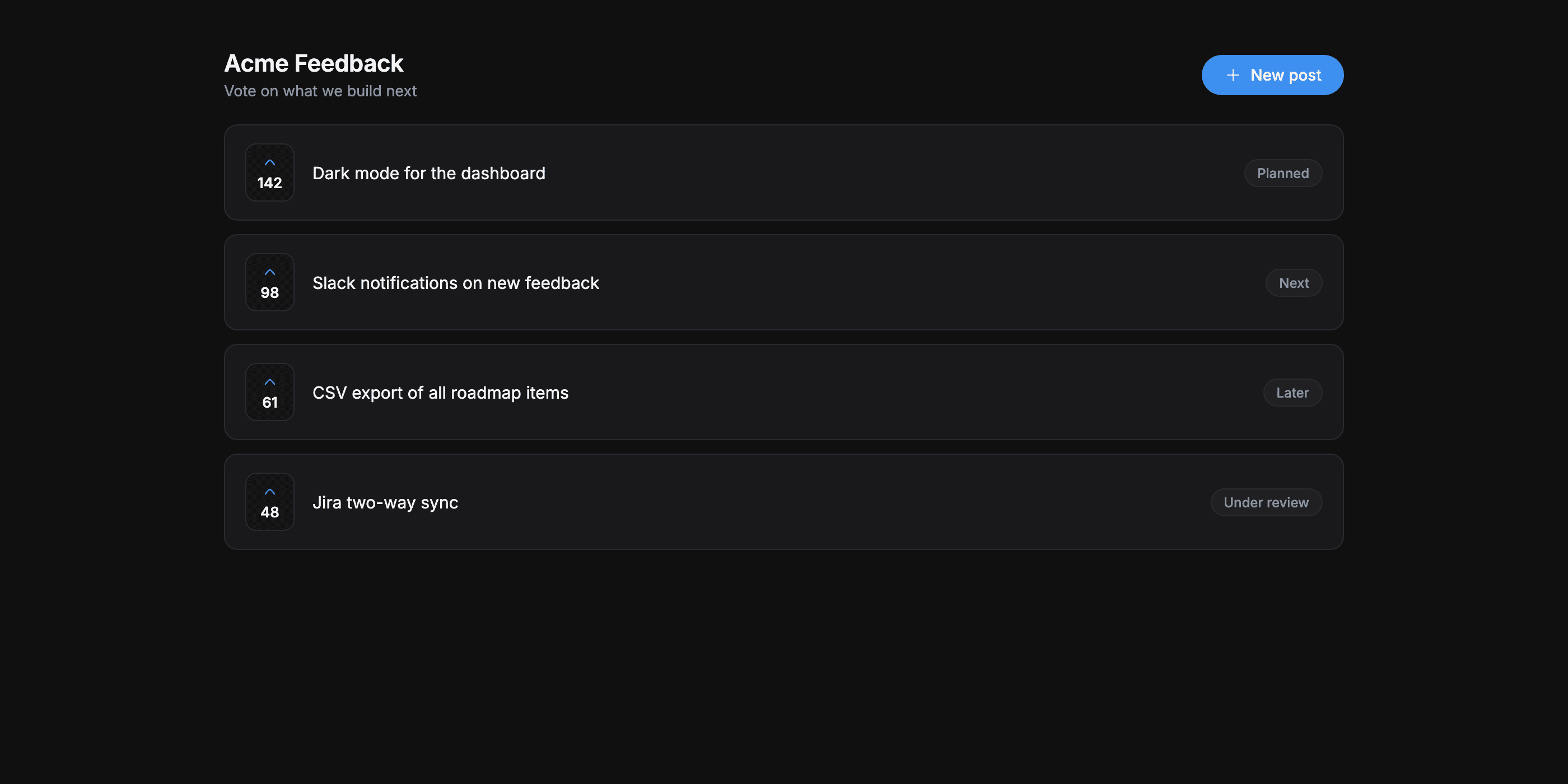
To close the feedback loop is to circle back to the people who asked for something and tell them it shipped. Most teams collect feedback well and then go quiet, leaving users to guess whether their request landed anywhere. This guide covers what the loop actually is, why closing it drives trust and retention, the steps to run it, and how to stop feedback from vanishing into a black hole.
What closing the feedback loop actually means
A feedback loop is not a suggestion box. It is a full cycle that starts with a user's request and ends with that same user hearing back. The loop is only closed when the person who spoke up learns what happened to their input, whether that is "we shipped it," "it is on the roadmap," or "we decided not to build this, and here is why."
Collecting feedback is the easy half. The hard half, the half almost everyone skips, is the return trip. An open loop is feedback you gathered and never answered. A closed loop is a conversation that finished.
The stages of the feedback loop
Every closed loop moves through the same stages. Naming them helps you see where yours breaks.
- Capture. A user submits a request, a bug report, or an idea. This should take seconds and should not require them to create an account.
- Group. Similar requests get merged into one theme so you see real demand, not fifty near-duplicates. Twenty phrasings of the same idea are one opportunity, not twenty tickets.
- Decide. You accept the opportunity onto a roadmap, or you decline it. Either way, a decision exists that you can point back to.
- Build. The accepted item becomes real work: a milestone, tasks, and commits that move it forward.
- Ship. The work reaches users.
- Tell. You notify the people who asked, publish a changelog entry, and update your public surfaces. This is the step that closes the loop.
Skip the last stage and every earlier stage was wasted from the user's point of view. They gave you a signal and got silence back.
Why closing the loop builds trust and retention
When someone asks for a feature and later gets a note saying "you asked for this, it is live now," three things happen. They feel heard. They trust that giving you feedback is worth the effort. And they have a concrete reason to come back and use the thing they wanted.
It turns passive users into contributors
People stop bothering to report anything the moment they conclude reports go nowhere. Every closed loop is proof that speaking up works, so they keep doing it. That steady stream of signal is what tells you what to build next, which makes the loop self-reinforcing.
It compounds into build-in-public momentum
A visible stream of shipped requests, on a public roadmap and a changelog, is a trust layer for prospects too. New visitors can see that this team listens and ships. For a solo founder or a small team, that credibility is hard to buy and easy to earn one closed loop at a time.
Feedback you never answer is a promise you quietly broke.
The black-hole failure mode
The most common way teams fail is not rudeness. It is a gap in tooling. Feedback lives in one place, execution lives in another, and nothing connects the request to the shipped result. So even when you do build the thing, no automatic thread ties it back to the person who asked.
The symptoms are familiar:
- Requests pile up in a board nobody revisits.
- Work happens in a separate tool with no link back to the original request.
- A feature ships and the people who wanted it never find out.
- The same request gets submitted again months later because the first submitter assumed it was ignored.
- Your changelog, if it exists, is a chore someone writes from memory long after the fact.
The root cause is a disconnect between feedback and execution. Feedback tools are strong at collecting and voting but are not execution systems. Execution tools like the ones big engineering orgs live in are strong at tasks but hold no public feedback or changelog. When the two are separate, the return trip depends on someone remembering to make it by hand, and busy people forget.
How to close the loop, step by step
You can run a closed loop with discipline and spreadsheets, or with tooling that connects the stages for you. Either way, the operational moves are the same.
- Make capture frictionless. Let users submit and vote with just an email, no account required. The lower the barrier, the more honest signal you get.
- Deduplicate before you plan. Merge similar requests into one theme so you plan against real demand and keep the list of people to notify attached to it.
- Make your roadmap public. A simple Now / Next / Later / Shipped board tells users where their request stands without you answering each one individually.
- Link the work to the request. When you turn an opportunity into tasks and a milestone, keep the connection to the original feedback intact so the loop can close itself later.
- Let shipping trigger the update. When the work is done, draft a changelog entry and publish it. Publishing should be the moment notifications go out.
- Notify the people who asked, specifically. The voters and requesters tied to that item should get a direct message that their request shipped, not just a generic broadcast.
The last two steps are where most manual processes collapse, because remembering exactly who asked for a feature you shipped weeks ago is nearly impossible without a system that kept the link.
How Feedock closes the loop for you
Feedock is built so that execution lives in the same workspace as feedback, which is what makes the loop close on its own. Feedback becomes a roadmap item, the roadmap item becomes a milestone and tasks, GitHub, GitLab, Bitbucket, and Gitea activity moves those tasks forward, and shipping drafts a changelog entry that a human approves before it goes live.
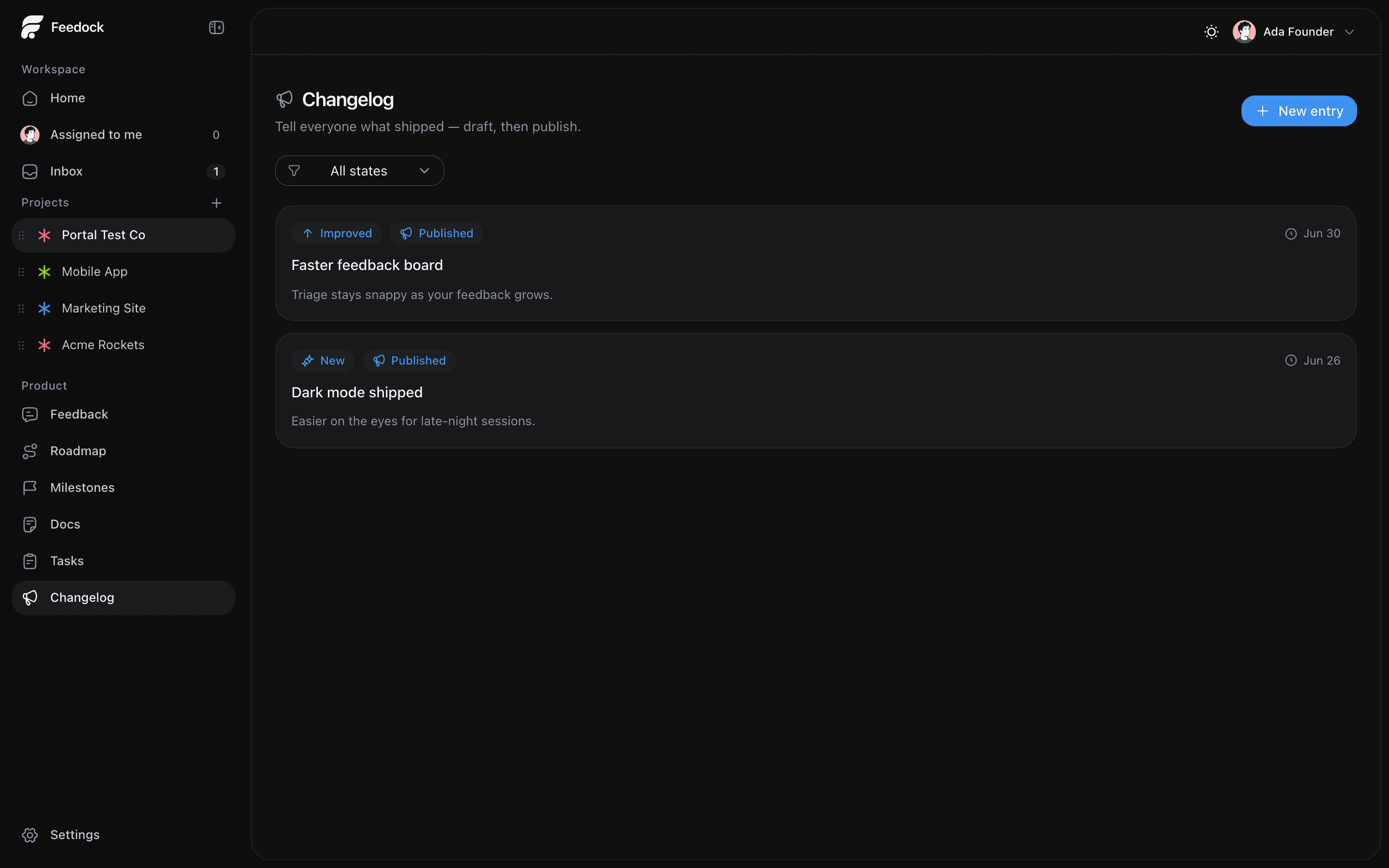
Because the link between the original request and the shipped work is kept the whole way through, publishing a changelog entry emails the exact voters and requesters who asked for it. Nobody has to remember who they were. The people who spoke up hear back automatically, and the update also lands on your public roadmap, your changelog, and your embeddable widget or portal.
A few honest details worth knowing:
- End users stay account-less: they submit and vote with an email verified by a magic link, and their addresses are never sent to any AI.
- AI only drafts. It groups similar requests and can draft a changelog entry, but a human always approves and publishes.
- You choose how the public surfaces appear: a hosted portal, a React SDK, or a one-line embeddable widget.
The result is that the return trip, the step everyone skips, happens by default instead of by willpower.
Frequently asked questions
What does it mean to close the feedback loop?
It means going back to the person who gave you feedback and telling them what happened to it. The loop is open while they are waiting to hear back and closed once they know the outcome, whether that is shipped, planned, or declined.
Why is closing the feedback loop important?
Because it proves that giving feedback is worth the effort. Users who hear back trust you more, keep contributing signal, and have a concrete reason to stay. Users who never hear back stop bothering, and you lose the input that tells you what to build.
How do you close the loop without doing it by hand every time?
Keep the link between each request and the work it becomes, so that shipping can trigger the notification. Feedock does this by keeping feedback and execution in one workspace, so publishing a changelog entry automatically emails the voters who asked.
Closing the loop is not a growth hack, it is basic follow-through, and follow-through is what small teams can do better than big ones. If you want the return trip to happen without adding a manual step to every ship, start free and let feedback become shipped work that tells the right people it landed.