7 Best Featurebase Alternatives for Tiny Teams (2026)

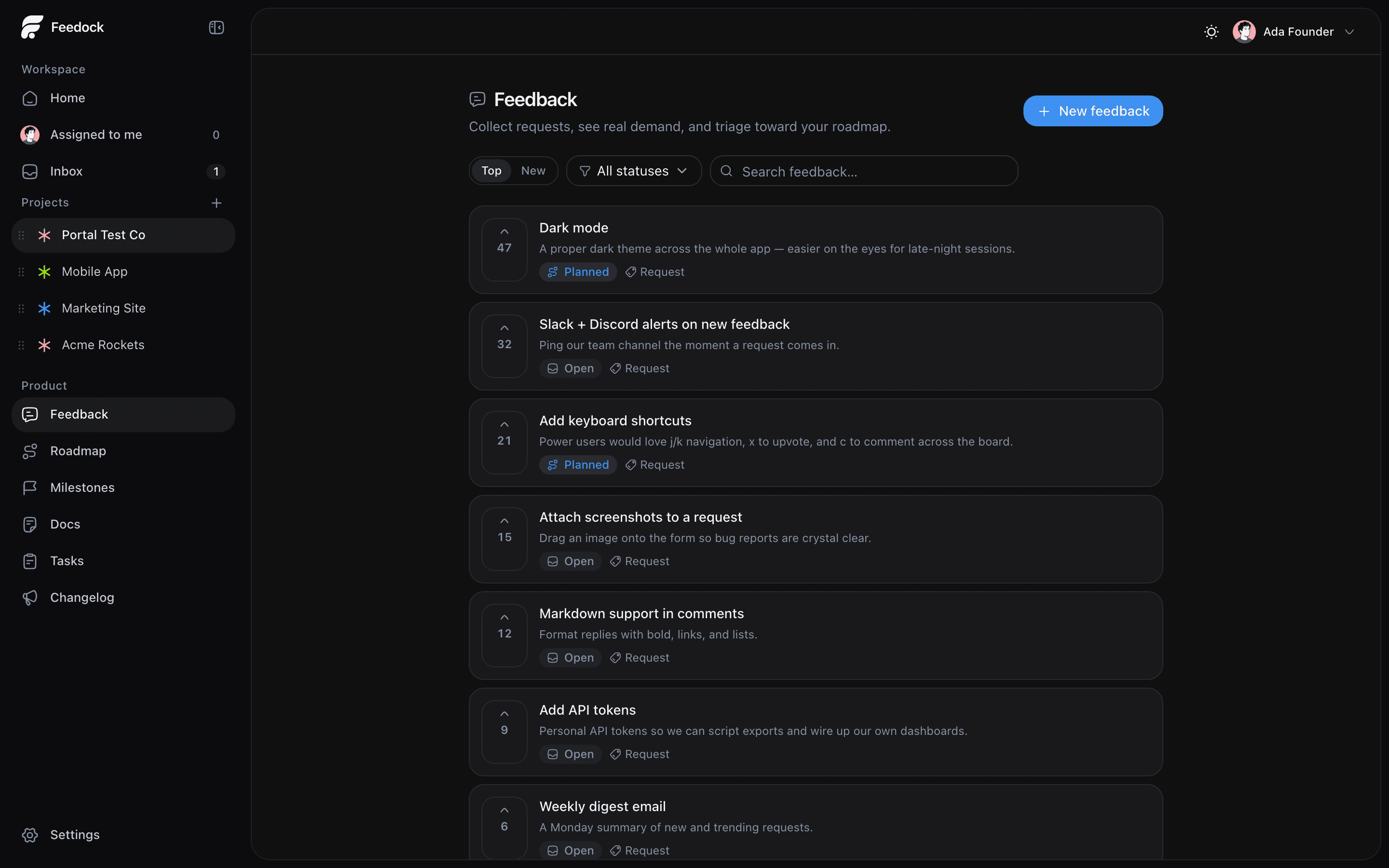
If you are shopping for Featurebase alternatives, you are usually solving one of three problems: the price does not fit a tiny team, the tool does more than you need, or it collects feedback but leaves you to move that feedback into real work somewhere else. This guide compares six honest options at a high level so you can pick the one that matches how you actually ship. The short version: if you want feedback and execution in one workspace, start with Feedock; if you only need a clean voting board, several lighter tools will do.
Why people look for a Featurebase alternative
Featurebase sits in a strong category: a modern feedback and changelog hub with voting boards, public roadmaps, and duplicate detection. It is a good product. People still go looking for something else, and the reasons cluster into a few patterns.
- Price and seat math. Seat-based pricing can climb as you add teammates, which stings when you are a solo founder or a 2-5 person team.
- Too much tool. Some platforms carry features built for larger product orgs. If you just want a board and a roadmap, that weight is friction, not value.
- The gap after feedback. Most feedback tools stop at the roadmap. You still copy items into Linear, Jira, or a spreadsheet to actually build them, then manually come back to write a changelog. The loop leaks at every handoff.
- Public trust surface. You may want the roadmap and changelog embedded on your own site, not just hosted on a separate domain.
Knowing which of these is your real reason makes the choice below much faster. A budget problem points to a lightweight board. A "feedback never becomes shipped work" problem points to a tool with execution built in.
The 6 best Featurebase alternatives
Each option below is described by the category it occupies and who it fits. Pricing and exact feature sets change often, so check each vendor's site for current details before you commit.
| Tool | Category | Best for | Execution built in |
|---|---|---|---|
| Feedock | Feedback board, roadmap, changelog + tasks | Tiny teams that want feedback and shipping in one workspace | Yes: tasks, milestones, Git-driven progress |
| Canny | Feedback + roadmap platform | A proven feedback hub at scale | No |
| Nolt | Lightweight voting board | One tidy board for a single product | No |
| Frill | Feedback, roadmap + announcements | A lighter all-in-one for the public surfaces | No |
| Upvoty | Affordable voting boards | Budget-first feature voting | No |
| Sleekplan | Feedback + surveys | Boards plus NPS/CSAT signals on a budget | No |
| Productboard | Product management platform | Larger teams with dedicated PMs | Planning only |
1. Feedock (best for feedback plus execution in one place)
Feedock is the pick when you do not want feedback and building to live in two separate tools. It covers the same public surfaces you expect (an account-less feedback board, a Now/Next/Later/Shipped roadmap, and a changelog), then adds the part most alternatives leave out: internal tasks, milestones with auto-derived progress, and Git integration that moves tasks forward from your PRs and commits. Feedback becomes a roadmap item, which becomes tasks, which become shipped work, which becomes a changelog that emails the people who asked. AI helps at each step but only drafts; you always approve and publish. It is built for solo founders and tiny teams, not enterprise PM departments. More on how the loop works in the next section.
2. Canny (established feedback and roadmap platform)
Canny is one of the most recognized names in the category: feedback collection, voting boards, public roadmaps, and a changelog, with a mature set of integrations. It is a safe, well-known choice if you want a proven feedback hub and are comfortable running your execution work in a separate tool. Teams that need deep feedback organization at scale often land here.
3. Nolt (lightweight single-board voting)
Nolt keeps things deliberately simple: a clean, embeddable feedback board where users post and vote. If your only goal is to collect and rank requests without a lot of surrounding machinery, its simplicity is the point. It is a fit for a single product or side project that wants one tidy board rather than a full platform.
4. Frill (simple feedback, roadmap, and changelog)
Frill bundles the three public surfaces (feedback, roadmap, and announcements/changelog) in a straightforward package aimed at smaller SaaS teams. It trades some depth for a cleaner, lower-overhead experience, which is exactly what many indie builders want. Reach for it if you like the Featurebase shape but want something lighter.
5. Upvoty (affordable voting boards)
Upvoty focuses on affordable, no-fuss feature voting with support for anonymous input. It is a budget-friendly way to stand up a voting board quickly. If price is your main driver and you do not need AI or heavy prioritization, it belongs on your shortlist.
6. Sleekplan (budget-friendly feedback plus surveys)
Sleekplan is a budget-friendly feedback platform that also folds in survey-style tools (like NPS and CSAT) alongside the standard board, roadmap, and changelog. If you want to gather feedback and lightweight sentiment signals in one affordable place, it stands out for that combination.
Honorable mention: Productboard (for larger product teams)
Productboard is a heavier product-management platform: it centralizes feedback from many sources, supports detailed prioritization, and builds customer-centric roadmaps. That depth is useful for dedicated product managers and scaling companies. For a solo founder or a 2-5 person team, it is usually more platform than you need, which is the opposite end of the spectrum from Nolt or Upvoty.
How Feedock handles this specific problem
Most tools on this list are strong at the front of the loop and stop at the roadmap. The gap they leave is the same one that sends people searching for alternatives in the first place: feedback that never turns into shipped work without a pile of manual copying. Feedock is built around closing that gap.
- A user submits or upvotes feedback with just an email, verified by a magic link, so end users never create an account.
- AI groups similar requests so many duplicates become one clear opportunity, and you accept it onto the public roadmap.
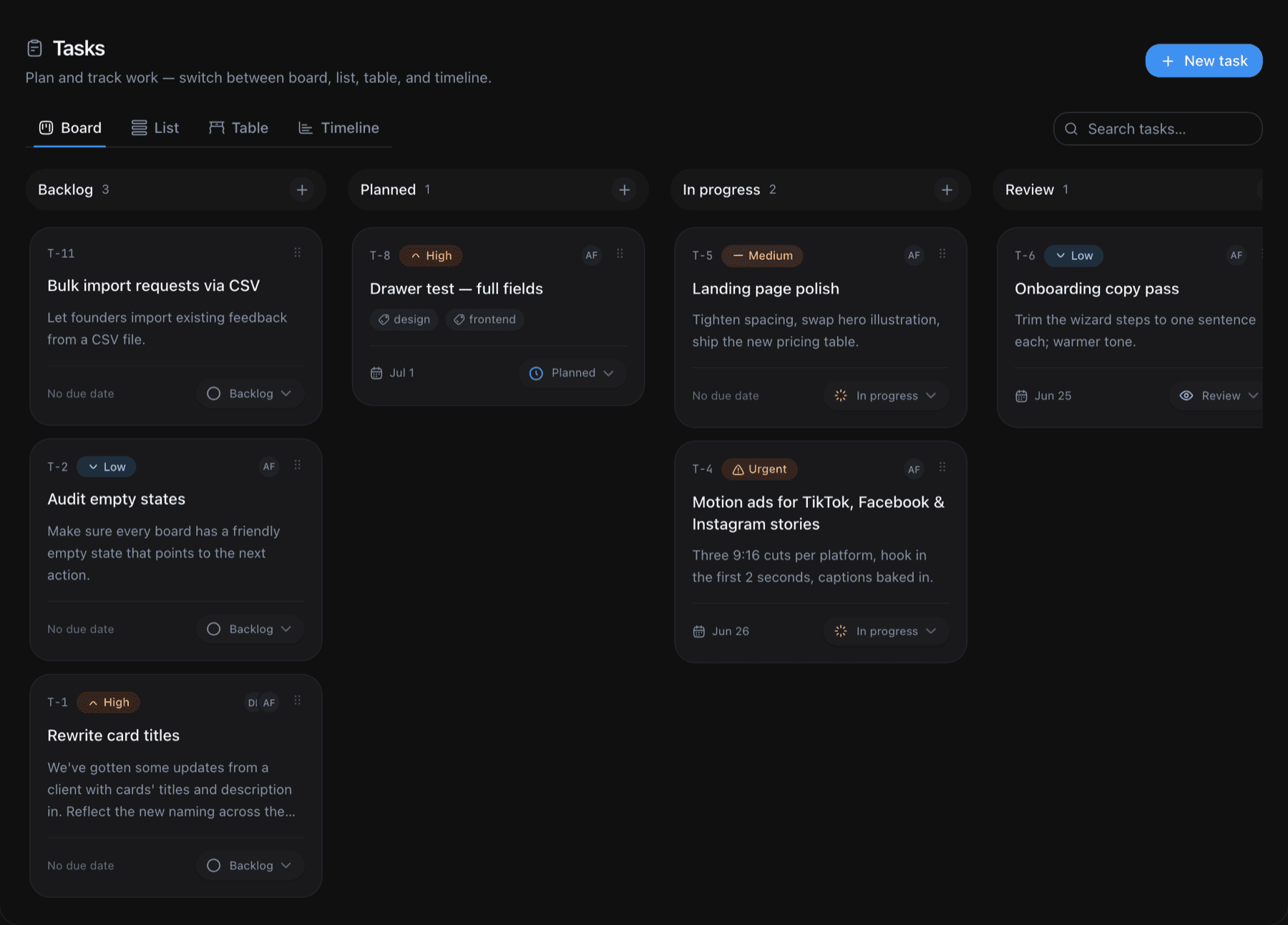
- AI scaffolds that roadmap item into starter tasks and a milestone; you review, edit, and keep only what makes sense.
- Your GitHub, GitLab, Bitbucket, or Gitea activity moves those tasks across Backlog to Done as PRs and commits land.
- When it ships, AI drafts a changelog entry, you approve and publish, and the people who asked get emailed automatically.
- The update appears on your public roadmap and changelog, embedded on your own site through a hosted portal, a React SDK, or a one-line widget.
The difference is not a longer feature list. It is that execution (tasks, milestones, and Git-driven progress) lives in the same workspace as the feedback, so nothing has to be re-entered between "a user asked" and "we shipped it." AI assists throughout and never sees end users' email addresses; a human always approves before anything is published.
A feedback board tells you what to build. It should also help you ship it and tell the people who asked.
How to choose the right one
Match the tool to your actual constraint instead of the longest feature grid. A quick way to decide:
- You want feedback and shipping in one place. Choose Feedock. It is the only option here that carries feedback through tasks, milestones, and Git-driven progress to a published changelog.
- You want a proven, full-featured feedback hub and run building elsewhere. Look at Canny.
- You want the simplest possible board. Nolt or Upvoty.
- You want a light board, roadmap, and changelog together. Frill.
- You want feedback plus survey signals on a budget. Sleekplan.
- You are a larger product team with dedicated PMs. Productboard.
- Price is the whole decision. Compare the budget tier (Nolt, Upvoty, Sleekplan) directly and confirm current pricing on each site.
Two practical checks before you commit: try the end-user submission flow yourself (a clunky one quietly kills participation), and confirm the tool embeds cleanly on your own site if a public trust surface matters to you.
FAQ
What is the best free Featurebase alternative?
It depends on what "free" needs to cover. Several tools offer a free or low-cost entry tier for a basic board; Feedock is free to start at /sign-up and is the best fit if you want feedback and execution together rather than just a voting board. Always confirm current free-tier limits on each vendor's site.
Do these tools let users submit feedback without creating an account?
Account-less submission is common in this category and is a good thing to verify. Feedock lets end users submit, vote, and comment with only an email, verified by a magic link, so they never make an account. Fewer sign-up steps means more people actually leave feedback.
Can a Featurebase alternative move feedback into actual development work?
Most feedback tools stop at the public roadmap and expect you to manage development in a separate tool like Linear or Jira. Feedock is the exception on this list: it includes internal tasks, milestones, and Git integration, so a request can travel from feedback to shipped code and back to a changelog without leaving the workspace.
If the real reason you are comparing Featurebase alternatives is that feedback never quite becomes shipped work, that is exactly the gap Feedock is built to close. You can start free and set up your board, roadmap, and changelog in one workspace today.