How to Build a Public Product Roadmap People Follow

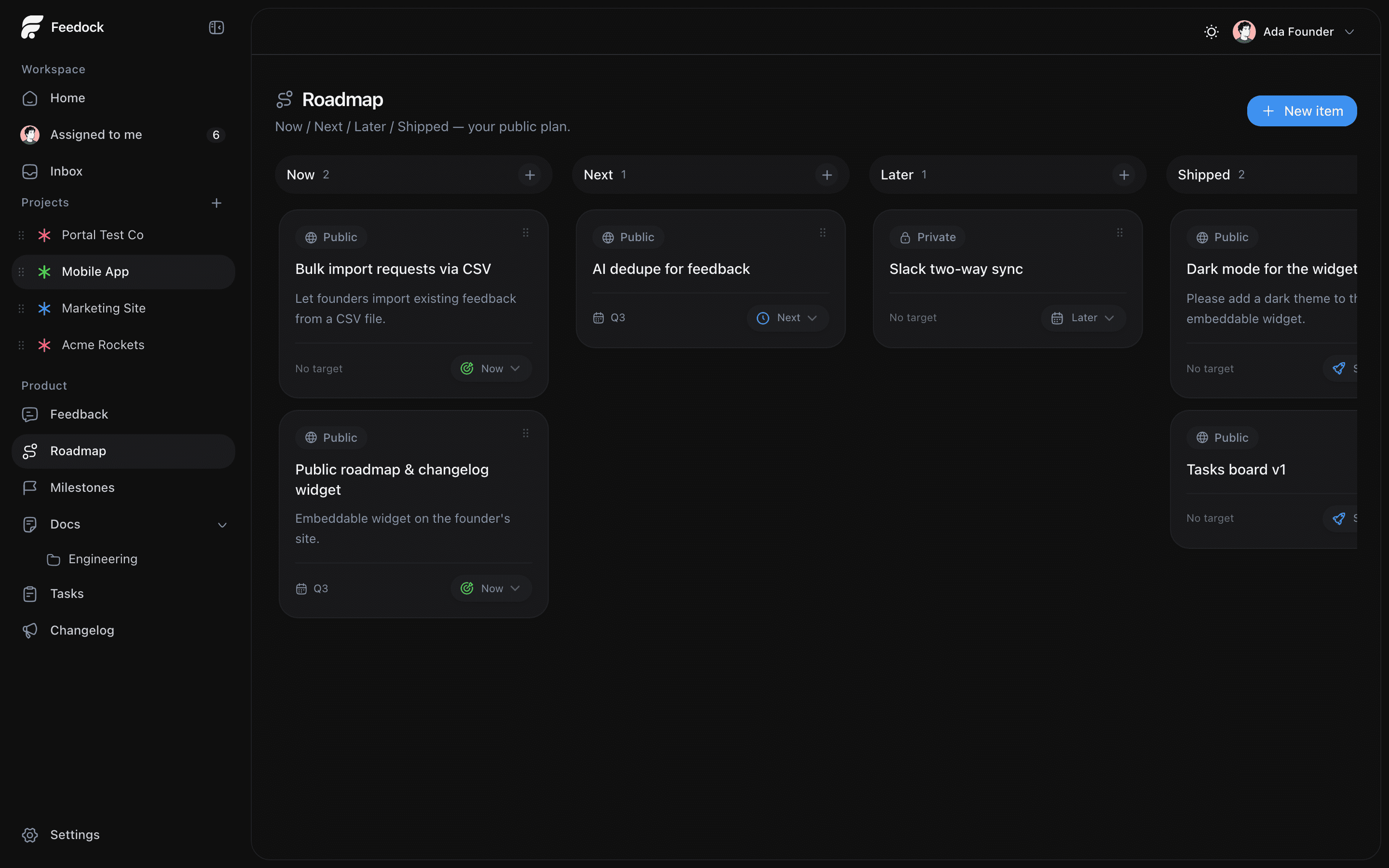
A public product roadmap tells your users what you are building, what is coming next, and what already shipped. Done well, it turns feedback into trust: people see their requests move forward, and they stop emailing you to ask for status. This guide walks through how to build one people actually follow, and how to keep it in sync without turning roadmap upkeep into a second job.
Why publish your roadmap at all
Keeping your plans private feels safe. But a private roadmap means every user with a question has to interrupt you to get an answer, and every person who submitted an idea is left guessing whether you heard them. A public roadmap does that work for you.
- It deflects support. "When is dark mode coming?" is answered by a link, not a reply you write for the tenth time.
- It shows momentum. Prospects and existing users can see you ship, which is a real signal for a small product.
- It closes the loop with requesters. People who asked for something can watch it move from idea to shipped, so they feel heard even before it lands.
- It gives you distribution. Every shipped item is a reason to post an update, and building in public compounds.
The honest tradeoff: a public roadmap is a promise. Publish only what you are willing to attempt, and keep the language about direction rather than dates you cannot commit to.
Choose simple columns: Now, Next, Later, Shipped
The most common way to kill a public roadmap is to over-structure it. Sprints, story points, and confidence percentages are for your internal tools. A public roadmap needs four columns and nothing more:
- Now: what you are actively building. Keep this list short so it stays believable.
- Next: what is queued and likely to start soon. This is a soft commitment, not a contract.
- Later: ideas you have accepted in principle but have not scheduled. This column absorbs demand without promising a timeline.
- Shipped: everything you have released. This is the column that builds trust over time, so let it grow.
Notice what is missing: no dates. Public dates you miss cost you more trust than vague direction ever will. If a user needs precision, they can subscribe and get told the moment it ships. Feedock uses these exact four columns for its public roadmap, so you inherit a sensible structure instead of designing one.
Decide what stays private
A public roadmap is not everything you are working on. Plenty of internal work has no business being public, and forcing it there just adds noise for your users and pressure for you.
Keep these off the public board
- Security fixes, refactors, and infrastructure work that users do not care about.
- Early exploration you might abandon. Publishing a half-formed idea invites hype you will have to walk back.
- Anything competitive or strategic you are not ready to signal.
- Internal tasks, specs, and estimates. Users want the outcome, not your execution plan.
The clean model is a per-item visibility toggle: default new items to private, and flip them public only when you are ready to stand behind them. In Feedock, every roadmap item, milestone, and doc carries a public or private setting, and the public surface physically cannot leak private items. That lets you plan everything in one place and expose only the slice you choose.
Tie roadmap items to the feedback and voters behind them
A roadmap item with no context is just a founder's opinion. A roadmap item that shows twenty people asked for it is a decision the whole audience can see the reasoning for. Connecting items back to the requests behind them does two things at once: it prioritizes your work honestly, and it tells each voter their request is on the board.
The workflow that keeps this cheap:
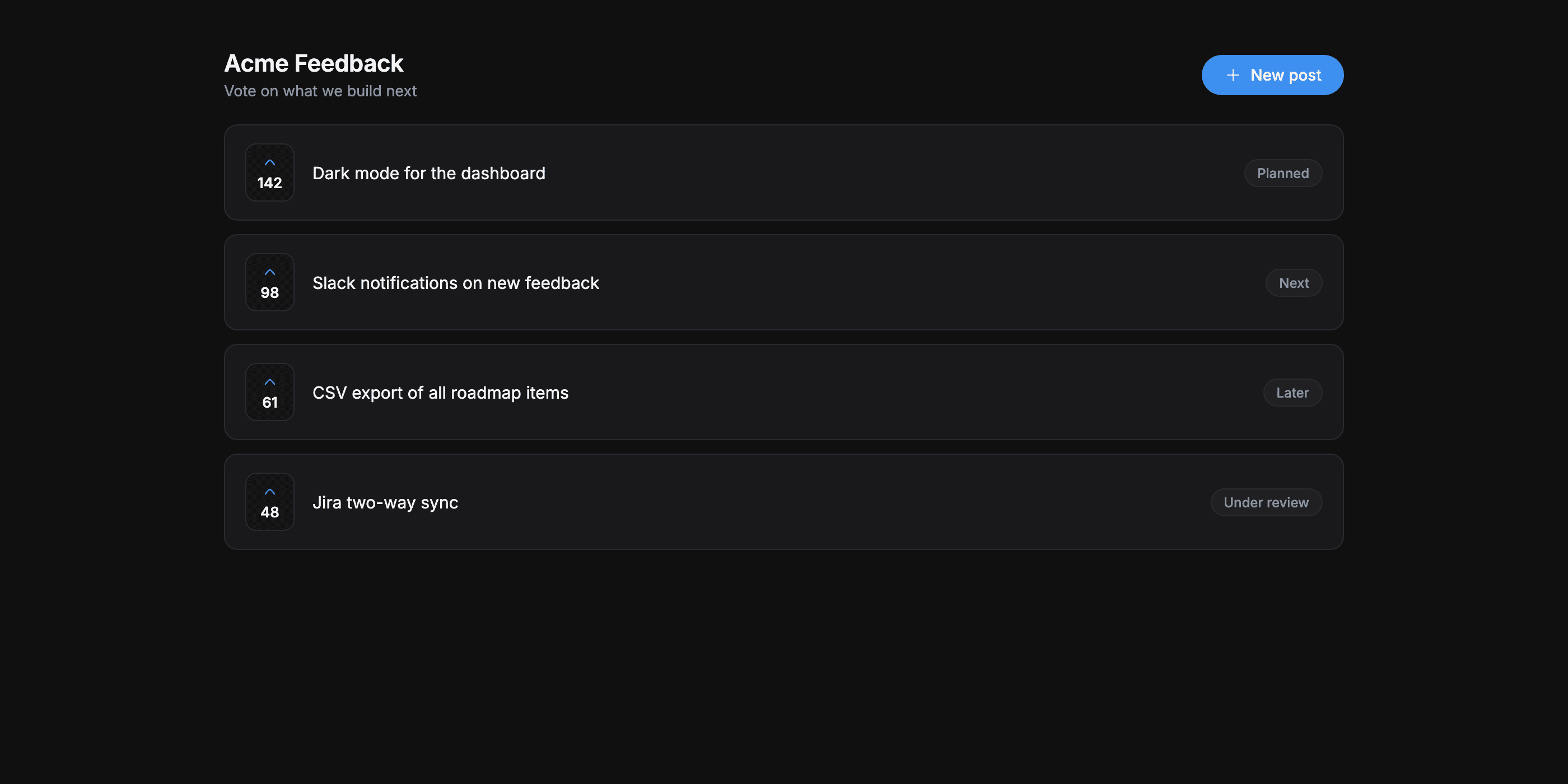
- Collect requests on a feedback board where users can submit and upvote.
- Group the duplicates. Twenty phrasings of the same idea are one opportunity, not twenty line items.
- Convert the accepted opportunity into a roadmap item, carrying the voters with it.
- Show the count. "14 people asked" on a roadmap card is the most honest prioritization signal you can publish.
Feedock is built around this link. End users vote account-less (just an email, verified by a magic link, no signup), an AI pass can cluster similar requests into one opportunity for you to accept or dismiss, and converting feedback into a roadmap item carries the requesters along so the "who asked" count follows the item all the way to shipped. The AI only drafts the clustering; you approve what becomes a real item, and end user emails are never sent to the AI.
Keep it in sync as you build
The reason most public roadmaps rot is drift. You ship things, the board does not move, and within a month it is obviously stale, so users stop trusting it. The fix is to make the roadmap update as a side effect of work you already do rather than a separate chore.
- Link roadmap items to the actual execution: the milestone and tasks that deliver them.
- Let real activity drive progress. When a pull request merges, the task moves, and the milestone's progress reflects it, so nobody re-types status.
- Review the board on a fixed cadence (weekly is plenty) and move at most a handful of items. Small, frequent movement reads as alive.
This is where a roadmap tool that stops at the roadmap falls short. Feedback tools are strong at collecting requests but are not execution systems, so the roadmap and the work live in two places and drift apart. Feedock links each roadmap item down to a milestone and its tasks, and connecting GitHub, GitLab, Bitbucket, or Gitea moves tasks forward from your commits and pull requests. Progress derives from work that actually happened, which is the only kind of roadmap sync that survives a busy week.
Close the loop when something ships
Shipping is not the end of the roadmap's job; it is the moment it pays off. When a task is done, three things should happen with as little effort from you as possible:
- The roadmap item moves to Shipped, so the board reflects reality.
- A changelog entry goes out explaining what changed and why it matters.
- The people who asked get told, because being notified that your request shipped is what turns a one-time voter into a repeat contributor.
In Feedock, publishing a changelog entry can mark the linked roadmap items Shipped and email the specific requesters who voted for them, plus your subscribers, in one action. The AI can draft the entry from the shipped work, but nothing goes out until you review and publish it. The public portal, the embeddable widget, and the React SDK all update from the same source, so wherever your users look, they see the same current picture.
A roadmap nobody updates is worse than no roadmap, because it advertises exactly how out of date you are.
Frequently asked questions
Should a public product roadmap include dates?
Generally no. Public dates you miss erode trust faster than vague timing ever will. Use direction-based columns (Now, Next, Later, Shipped) and let users subscribe to be notified when something actually lands, which is more useful to them than a date anyway.
How do I stop competitors from seeing my plans?
Keep sensitive work in the Later column with vague framing, or keep it private entirely. A good roadmap tool lets you plan everything internally and publish only the items you choose, so exposure is a per-item decision, not all-or-nothing.
How often should I update my public roadmap?
Aim for visible movement at least weekly. The most reliable way to hit that is to make the roadmap update from work you already do, so linking items to tasks and letting shipped work move them beats a manual weekly cleanup you will eventually skip.
A public product roadmap works when it is simple to read, honest about what stays private, connected to the people who asked, and updated by the work itself rather than by hand. If you want the whole loop (feedback, voting, roadmap, execution, and a changelog that emails the people who asked) in one workspace, you can start free and publish your first roadmap today.