How to Collect User Feedback Without Annoying Anyone

The best way to collect user feedback is to make it so easy that people barely notice they did it. Most feedback tools do the opposite: they ask users to create an account, verify an email, and dig through a portal before they can say one sentence. This guide walks through how to gather feedback for a SaaS without annoying anyone, and how to turn the raw pile into a list you can actually act on.
Why most feedback collection annoys people
Friction kills feedback. Every extra step between a user's thought and the submit button loses you a percentage of responses, and the people you lose first are often the busy ones with the sharpest opinions. Three things do most of the damage:
- Forced accounts. Asking someone to sign up just to report a bug is a tax on helping you. Most people will not pay it.
- Wrong timing. A survey that interrupts a task gets a reflexive dismissal, not a considered answer.
- Silence after. If a user submits an idea and never hears anything again, they learn that feedback goes into a void. They stop sending it.
Fix these three and you fix most of the problem. The rest is about capturing feedback where users already are and keeping the incoming stream organized.
Make submitting feedback low-friction
The single biggest lever is removing the account requirement. Your end users are not your teammates. They should be able to submit, vote, and comment with nothing more than an email, verified with a magic link when they first act. No password, no profile, no dashboard to learn.
Aim for one click, then one field
- Let users upvote an existing request with a single click. Voting is the lowest-effort signal you have, so never gate it behind a form.
- For new feedback, ask for one thing: a short description. Collect the email in the background when they confirm, not as a wall up front.
- Verify identity with a magic link instead of a password. It confirms the email is real, keeps out spam, and asks the user to remember nothing.
- Confirm the submission clearly and tell the person you will follow up when it ships. That promise is what earns you the next piece of feedback.
Account-less submission is not just kinder to users. It widens your sample, because the people who would never make an account are exactly the ones whose opinions you were missing.
Capture feedback where users already are
Do not make people leave your product to tell you something about your product. The channel matters as much as the form. A few that consistently work:
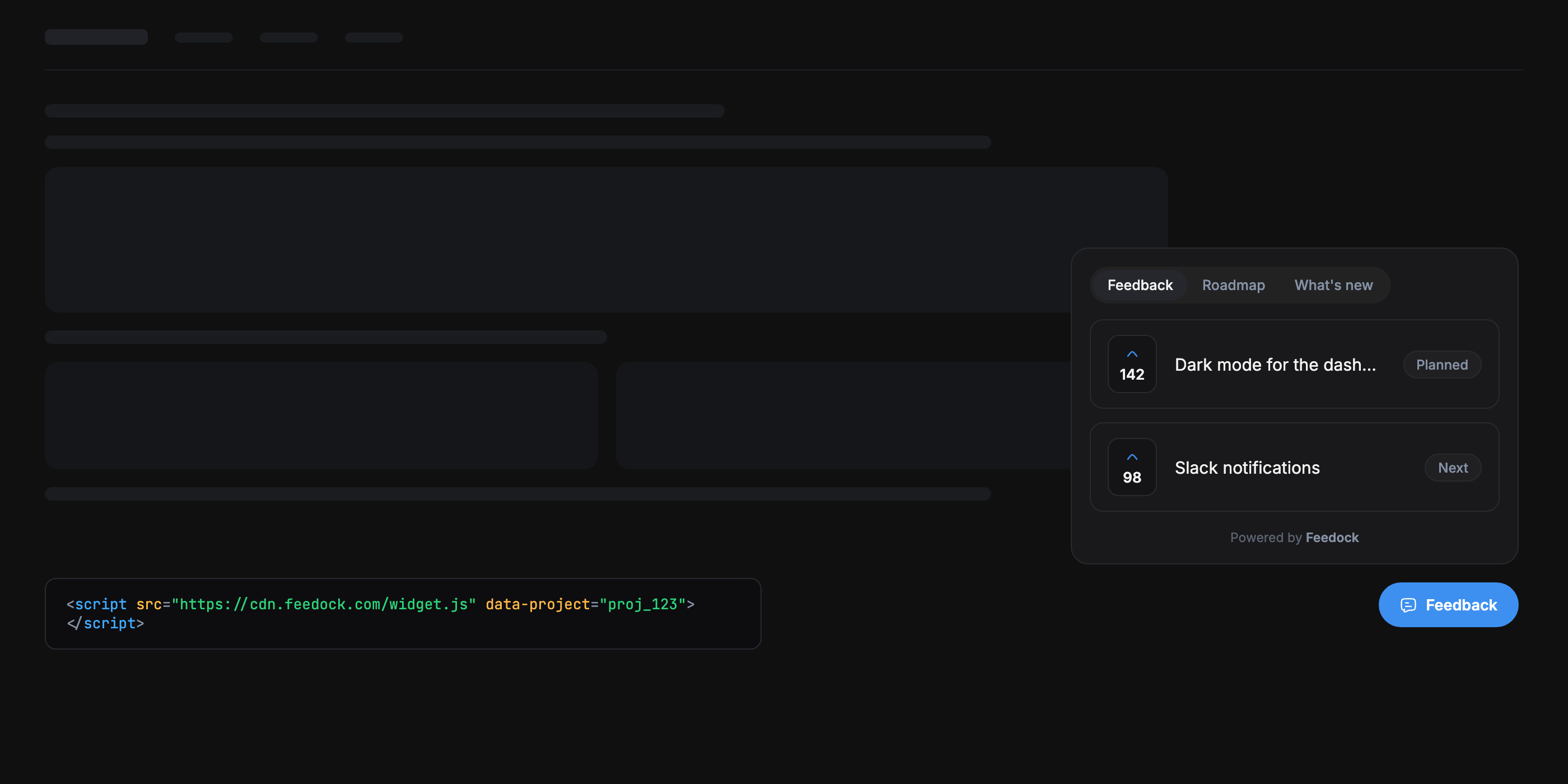
- An embedded widget in your app. A small launcher that opens a feedback panel in place means the user never breaks context. This is where most of your best feedback will come from.
- A public feedback board. A hosted page where users can see what others asked for, upvote instead of re-submitting, and watch requests move toward shipped.
- A public roadmap. Now / Next / Later / Shipped columns turn your backlog into something users want to check, which invites comments on the things you are already planning.
- Support and community threads. Bugs and requests surface in support tickets and chat every day. Have a fast way to log them into the same system instead of losing them in an inbox.
The goal is one destination for feedback with several on-ramps into it. When everything lands in the same place, you can prioritize across all of it instead of juggling five inboxes.
De-duplicate so the same request is not logged ten times
Once feedback flows in easily, you get a new problem: the same idea arrives worded ten different ways. "Dark mode," "night theme," and "the white background hurts my eyes at night" are one request. If you count them as ten separate items, your priorities get noisy and your roadmap looks scattered.
How to keep duplicates under control
- Let users see existing requests before they post. Half of duplicates never get created if people can find and upvote the request that already exists.
- Merge duplicates into one canonical item. When you merge, fold the votes and the requesters together so the combined item shows its true weight, and the people who asked stay attached to it.
- Group by theme, not by wording. Cluster requests by what the user wants, so "night theme" and "dark mode" collapse into one opportunity you can prioritize as a unit.
Done well, de-duplication turns twenty scattered comments into one clear signal: this is what a lot of people want, and here is how many.
Turn raw feedback into a prioritized list
Collecting feedback is only half the job. A pile of requests is not a plan. To decide what to build next, weigh each opportunity on a couple of honest axes:
- Demand. How many distinct people asked, and how strongly (votes, comments, repeat mentions). Deduplicated counts make this number trustworthy.
- Fit. Does this move your product toward what it is meant to be, or is it a request from someone who is not really your user?
- Effort. Rough cost to build. A small item with steady demand often beats a large item with loud demand.
Rank on those, pick the top few, and move them onto a roadmap where users can see the decision. Then close the loop: when the work ships, tell the people who asked. That last step is what makes users keep sending feedback, because they learn it actually goes somewhere.
How Feedock lowers the friction
Feedock is built around exactly this flow, from the first submission to the shipped update. End users submit, vote, and comment account-less: just an email, verified with a magic link, no account to create. The feedback board, public roadmap, and an embeddable widget give you several on-ramps that all feed one place.
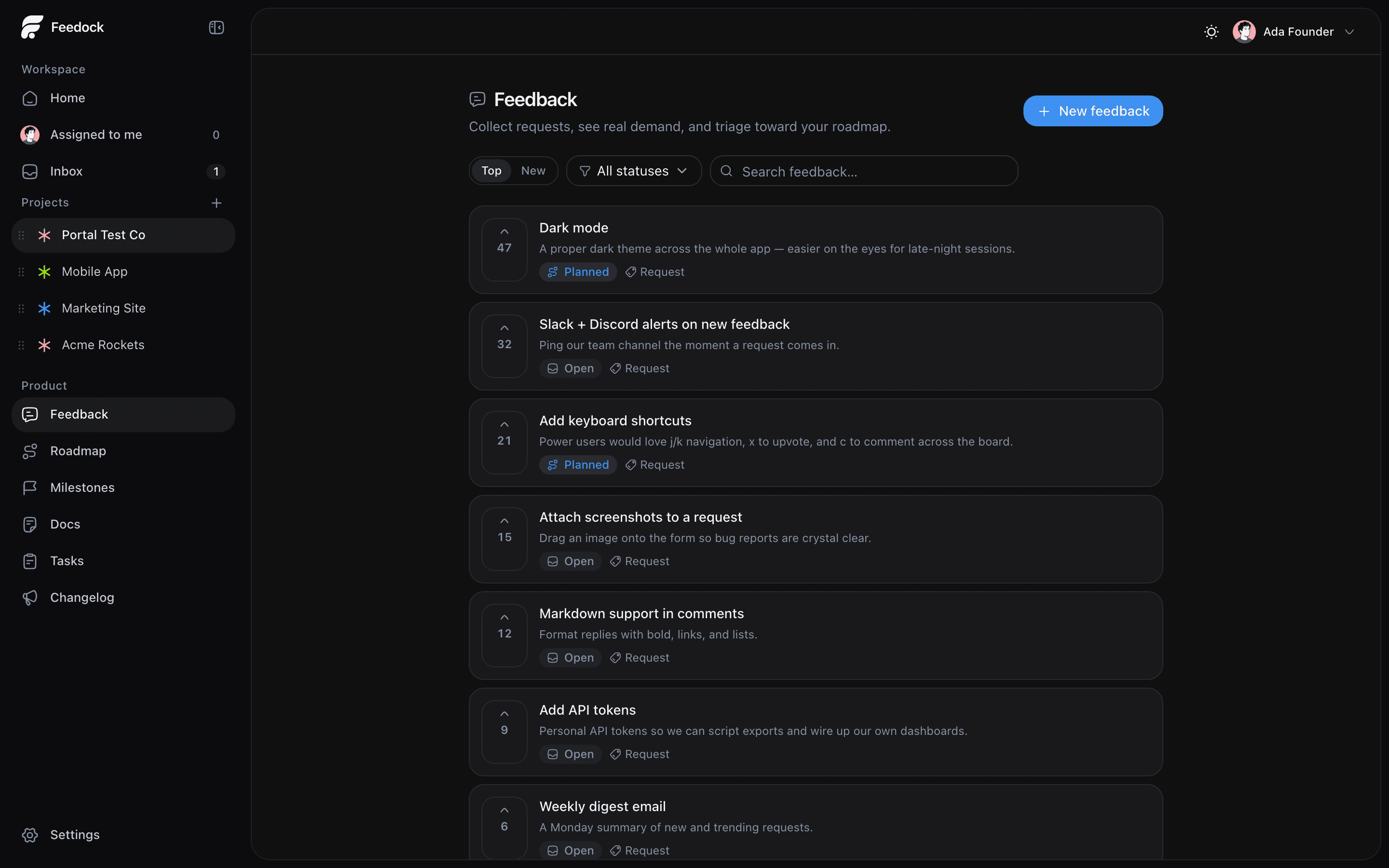
On the de-duplication side, Feedock's AI clusters similar requests into a single opportunity so twenty near-identical asks show up as one item with its real vote count. AI only drafts the grouping; you review and accept it, and a human always approves what becomes a roadmap item. From there the same request can turn into tasks and milestones, move forward as your commits and PRs land, and become a changelog entry that emails the exact people who asked. The point that competing feedback tools tend to miss is that execution lives in the same workspace, so feedback becomes shipped work without a handoff.
The feedback you never hear is the feedback you made too hard to give.
Frequently asked questions
How do I collect user feedback without making people create an account?
Let end users submit and vote with just an email, verified by a magic link when they first act. No password or profile is needed, which removes the biggest reason people abandon a feedback form. Feedock does this by default so your users stay account-less.
What is the best channel to collect feedback for a SaaS?
An embedded widget inside your app captures the most, because users never leave what they were doing. Pair it with a public board and roadmap so people can upvote existing requests instead of filing duplicates, and route it all into one place you can prioritize from.
How do I stop the same feature request from being logged many times?
Show users existing requests before they post so they upvote instead of re-submitting, and merge near-identical items into one canonical request that keeps the combined votes and requesters. AI clustering can group requests by intent rather than exact wording, so variations of the same idea collapse into a single opportunity.
Collecting user feedback well means removing friction, meeting users where they are, and proving that their input goes somewhere. If you want a workspace that does all of this and carries a request through to shipped, start free.