The loop is the product

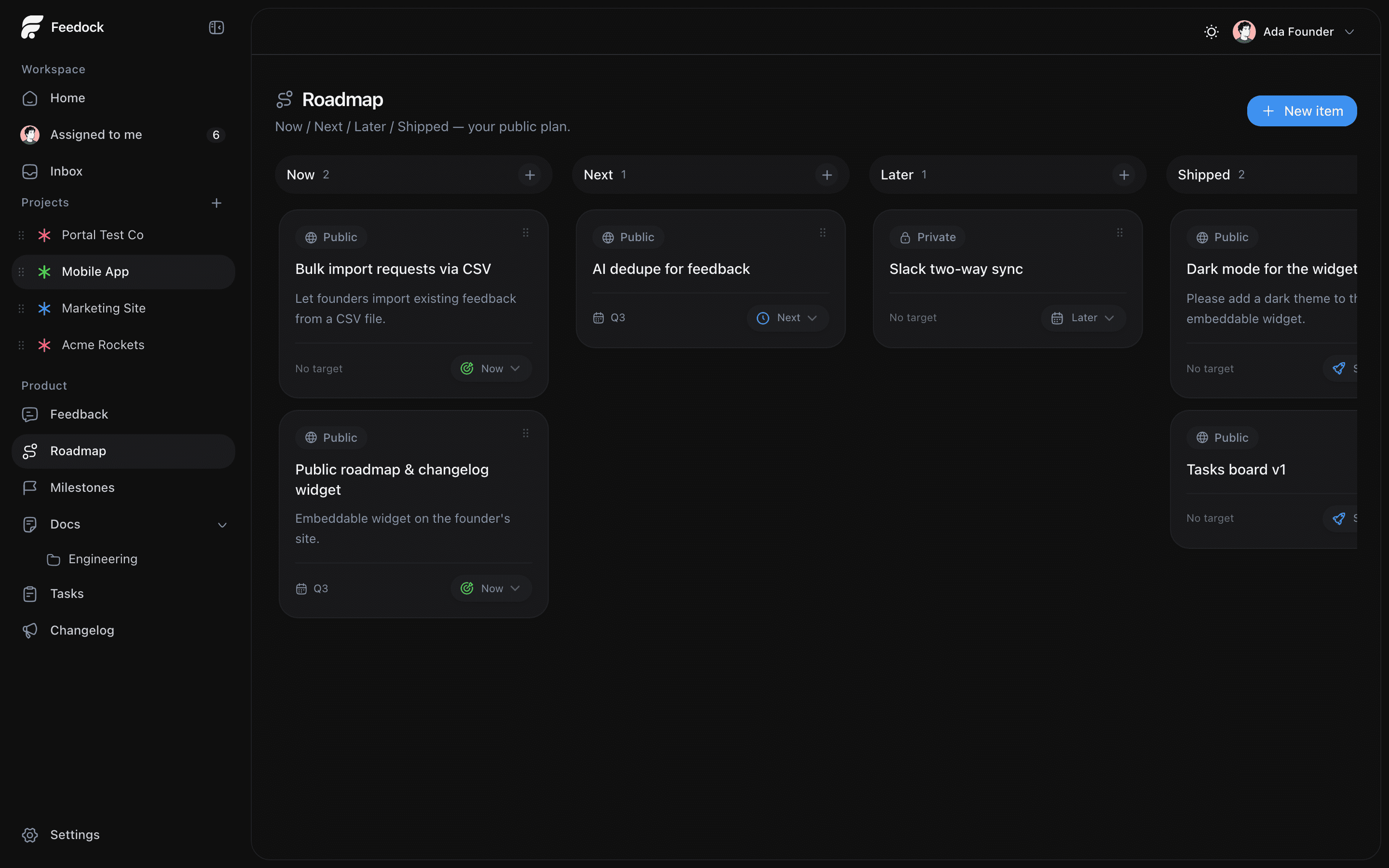
Line Feedock up against a dedicated feedback tool, feature by feature, and you'll always find a box it ticks less thoroughly. That comparison misses the point. The value isn't in any single surface. It's in what happens between them.
Walk the loop
Say twenty users ask for dark mode, in slightly different words, over three weeks. Here's what that becomes:
- Feedock's AI groups the near-duplicate requests into one opportunity, with every voter attached, so you see real demand at a glance.
- You accept it, and it becomes a roadmap item. No retyping, and the voters come with it.
- From that item, AI scaffolds a milestone, a few starter tasks, and a spec draft. You review and adjust.
- You open a pull request that references the task. When it merges, the task moves to Done and roadmap progress updates itself.
- You draft a changelog entry (AI writes the first pass) and publish. Everyone who asked for dark mode gets told it shipped.
- Your public widget and portal update, and the trust compounds.
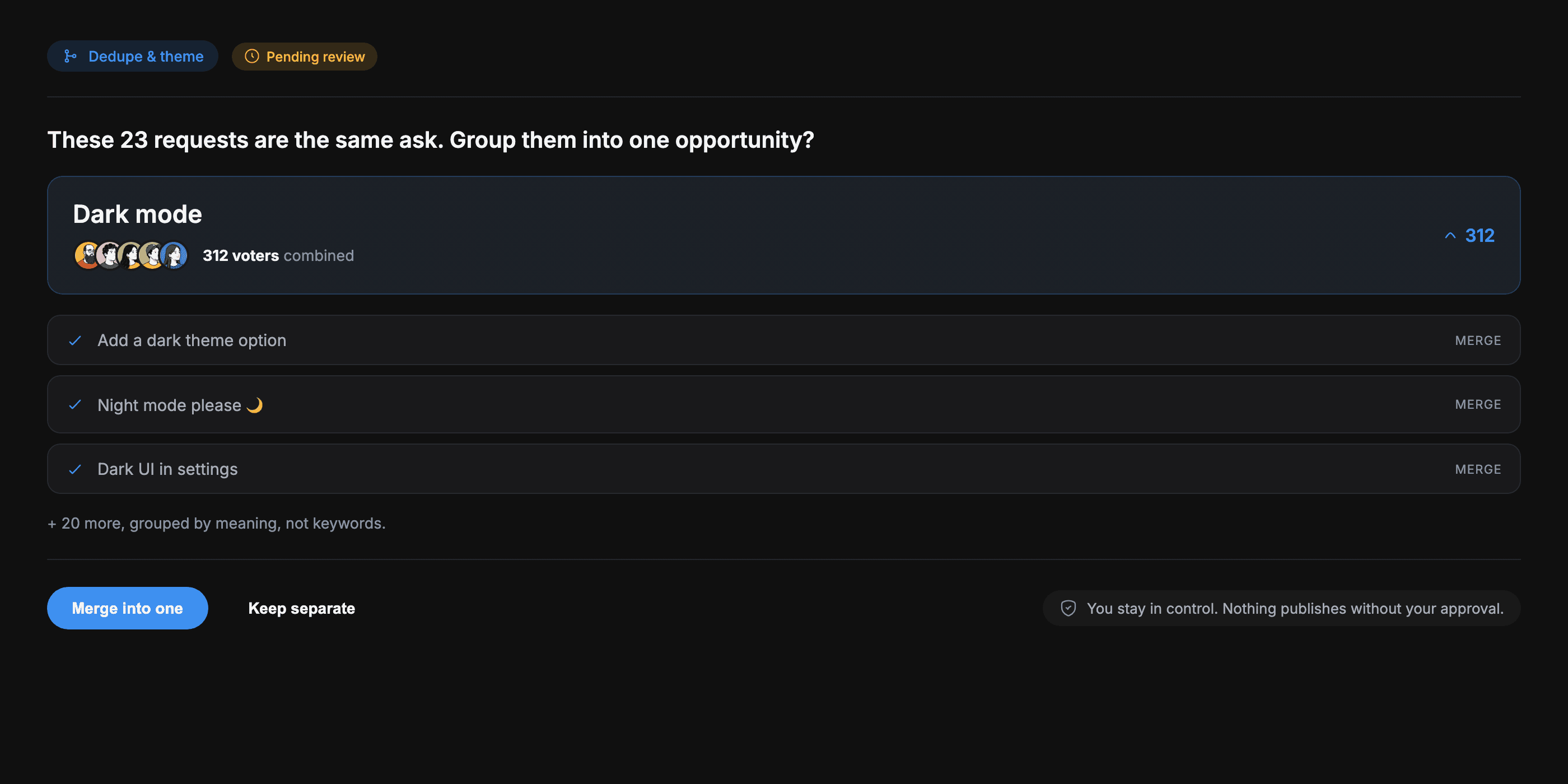
No copy-paste. No status meeting. No customer wondering whether their request fell into a black hole. That flow, end to end, is the product.
Why not Featurebase plus Linear?
Because the hand-offs are where teams lose time and users lose trust. Two great tools with a manual seam between them is still a manual seam, and you pay for it every time a request has to become a task, or a shipped task has to become an announcement.
A mediocre Featurebase plus a mediocre Linear loses. Feedock wins on the loop.
A principle, not a pile of features
Every feature in Feedock earns its place by being a link in this chain. If it doesn't help a request become shipped work, or shipped work become a notified user, it doesn't belong. That constraint is what keeps the tool simple, which, for a team of one to five, is the whole game.
Want to see the loop on your own product? Start free. It takes about two minutes to stand up a board.